

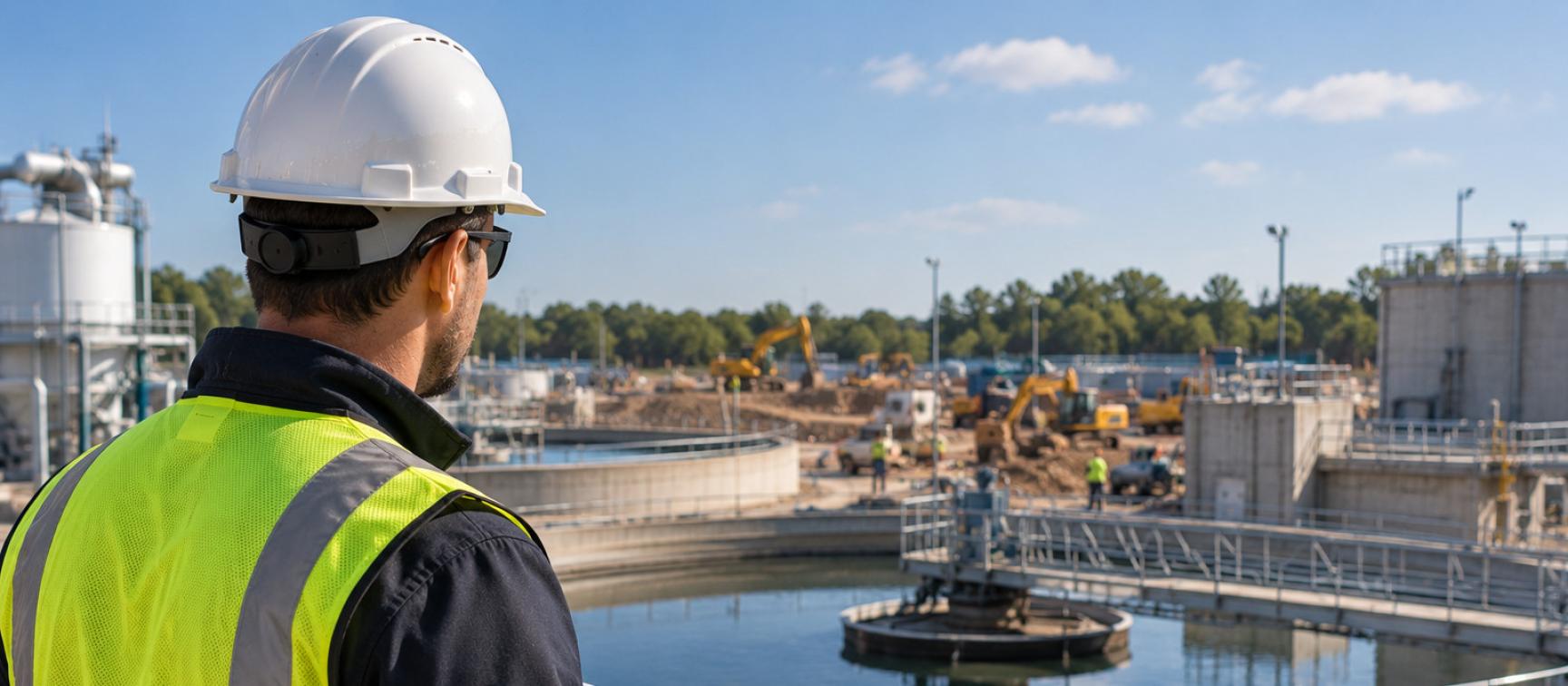
Why Speed, Efficiency and Communication Matter When Hiring Top Water & Wastewater Construction Talent
The U.S. water and wastewater construction market is delivering some enormous projects.
Treatment plant expansions, advanced water purification facilities, pump stations, pipelines and major conveyance programs are creating continued demand for experienced Project Managers, Superintendents, Project Engineers, Estimators, Schedulers and construction leaders.
For contractors, however, finding the right person is only part of the challenge.
In a specialist market where experienced candidates can have several options, the speed and quality of your hiring process can directly influence whether you secure the person you want.
The Best Candidates Aren't Always Looking
Some of the strongest professionals in water and wastewater construction are already employed and reasonably happy where they are.
They might be open to a better opportunity, but they aren't desperate to move.
Perhaps they want larger projects, greater responsibility, less travel, a better location or a clearer route into senior management.
This creates an important dynamic. The contractor isn't simply deciding whether it wants the candidate.
The candidate is also deciding whether they want the contractor.
Every interaction during the recruitment process contributes to that decision.
A Specialist Market Means a Smaller Talent Pool
Finding an experienced construction professional is difficult enough. Finding someone with specific water and wastewater experience can be considerably harder.
A contractor might need a Project Manager who has delivered major treatment plants, a Superintendent with strong process mechanical experience or an Estimator who understands large municipal water projects.
The more specific the requirement becomes, the smaller the available candidate pool.
When the right person enters the process, unnecessary delays create risk.
Speed Doesn't Mean Rushing
A fast hiring process isn't the same as a rushed hiring process.
Senior construction hires still require proper assessment. Project experience needs to be understood, cultural fit matters and compensation, travel and career expectations all need to align.
But none of that requires unnecessary gaps between stages.
If a candidate has a strong interview on Monday, they shouldn't still be waiting two weeks later to find out whether the contractor wants another conversation.
An efficient process can still include multiple interviews. The difference is that every stage has a purpose and the next step happens quickly.
Momentum Matters
Imagine an experienced wastewater Superintendent interviewing with three contractors.
One provides feedback the following day and arranges a second conversation within the same week.
Another takes a week to respond.
The third spends ten days arranging the next interview.
By the time the slower businesses are ready to progress, the first contractor may already be discussing an offer.
That doesn't necessarily mean it was originally the candidate's preferred opportunity.
It simply created momentum.
For passive candidates particularly, momentum can be extremely important.
Silence Creates Uncertainty
Communication is one of the easiest areas of the hiring process to improve.
After an interview, candidates want to know what happens next.
If there isn't an immediate decision, that's fine. Tell them.
If a hiring manager is traveling and feedback will take several days, explain that.
If another senior manager needs to meet them, arrange it and communicate the timescale.
Candidates don't expect every process to happen overnight, but they do expect to understand what's happening.
When communication disappears, candidates naturally continue progressing other opportunities.
Your Hiring Process Represents Your Business
The recruitment process is often one of the first substantial experiences someone has with a contractor.
A well-organized process can suggest a company that communicates effectively, makes decisions and respects people's time.
A disorganized process can create questions.
If arranging a second interview takes three weeks, what will decision-making be like once they join?
If nobody provides feedback, how well does management communicate internally?
Those conclusions aren't necessarily accurate, but candidates can only judge a business based on what they experience.
Get the Right People Involved Early
One of the easiest ways to improve efficiency is deciding who actually needs to meet the candidate before the process begins.
A candidate shouldn't complete three interviews only for somebody to suddenly decide the Regional VP also needs to meet them.
If several stakeholders genuinely need involvement, plan around it.
Combine interviews where appropriate, reserve diary space and make sure everyone understands their role in the decision.
Removing unnecessary downtime can significantly shorten the process without lowering hiring standards.
Be Clear About the Opportunity
Contractors also need to know exactly what they're recruiting for.
The location, responsibilities, travel requirements, project type, reporting structure, compensation and career potential should be understood early.
This allows candidates to make informed decisions and enables recruiters to target the right people.
It also prevents situations where someone completes several interviews before discovering the position involves 80% travel or the salary range is considerably below their expectations.
Don't Wait Until the Offer to Sell the Role
Interviews shouldn't only be about assessing candidates.
Contractors also need to explain why somebody should want to join them.
If the company has a significant backlog of water projects, talk about it.
If the candidate will be joining a $300 million wastewater treatment plant expansion, explain the scope.
If there is a genuine path from Project Manager to Senior Project Manager or Project Executive, discuss it.
Experienced construction professionals are often motivated by the work itself.
The opportunity to deliver larger projects, gain exposure to new treatment technology or take greater responsibility can be just as important as salary.
Avoid Surprises at Offer Stage
By the time an offer is prepared, both sides should already have a good understanding of what is likely to work.
Compensation expectations, bonuses, allowances, travel, relocation and likely start dates should have been discussed.
If the first serious salary conversation happens when the written offer arrives, too much uncertainty has been left until the end.
This is also where a specialist recruitment consultant can add considerable value by managing expectations throughout the process rather than waiting until offer stage to discover a problem.
Remember the Counteroffer
When an experienced employee resigns, their existing contractor may try to keep them.
Understanding why the candidate wants to move is therefore important.
If they're leaving because of limited progression, excessive travel or a lack of larger projects, a salary increase from their current employer may not solve the underlying issue.
Good communication throughout the process helps ensure the candidate is making a considered career decision rather than simply comparing two numbers.
The Process Doesn't End at Acceptance
Once a candidate accepts an offer, communication shouldn't suddenly stop.
They may have several weeks' notice to work, during which their current employer may be trying to retain them.
A call from their future manager, information about the project they're joining or an introduction to their new team can help maintain engagement before their start date.
A smooth onboarding process then needs to continue the experience you've created during recruitment.
How a Recruitment Consultant Can Help
A good specialist recruitment consultant should do considerably more than send resumes.
They should understand what the contractor needs, properly qualify candidates and know what could motivate those candidates to move.
Once interviews begin, they become an important communication link.
They can gather immediate feedback, identify concerns, manage expectations and tell a contractor when time is becoming a problem.
If a candidate has two final interviews elsewhere, the client needs to know.
If they're losing interest after a week without feedback, that's useful information.
If they love the opportunity but have concerns about travel, that's a conversation worth having before offer stage.
Good recruitment is about information moving quickly in both directions.
The Best Candidate Won't Necessarily Wait
Contractors don't need to make reckless hiring decisions to compete for talent.
They simply need to remove unnecessary delays.
Know what you need. Get the right decision-makers involved. Communicate clearly. Provide feedback quickly. Be transparent about the opportunity. And when you've found the right person, be prepared to act.
The U.S. water and wastewater sector has an enormous amount of infrastructure to deliver over the coming years, and contractors will need experienced people to deliver it.
When two companies can both offer interesting projects, competitive compensation and career progression, the difference can sometimes be surprisingly simple:
Which company made the candidate feel like they genuinely wanted them?
At Approach Talent USA, we specialize in recruitment across U.S. construction, including the water, wastewater and heavy civil sectors. We work closely with contractors and candidates throughout the hiring process, helping both sides communicate clearly, make informed decisions and keep the process moving when the right person and the right opportunity come together.
Recent News
Inside Austin’s $1.5 Billion Wastewater Expansion: Building for a Growing City
Why the Right Recruitment Consultant Could Be One of the Best Connections in Your Water Career
From Wastewater to Drinking Water: Inside El Paso's First-of-Its-Kind Pure Water Center