

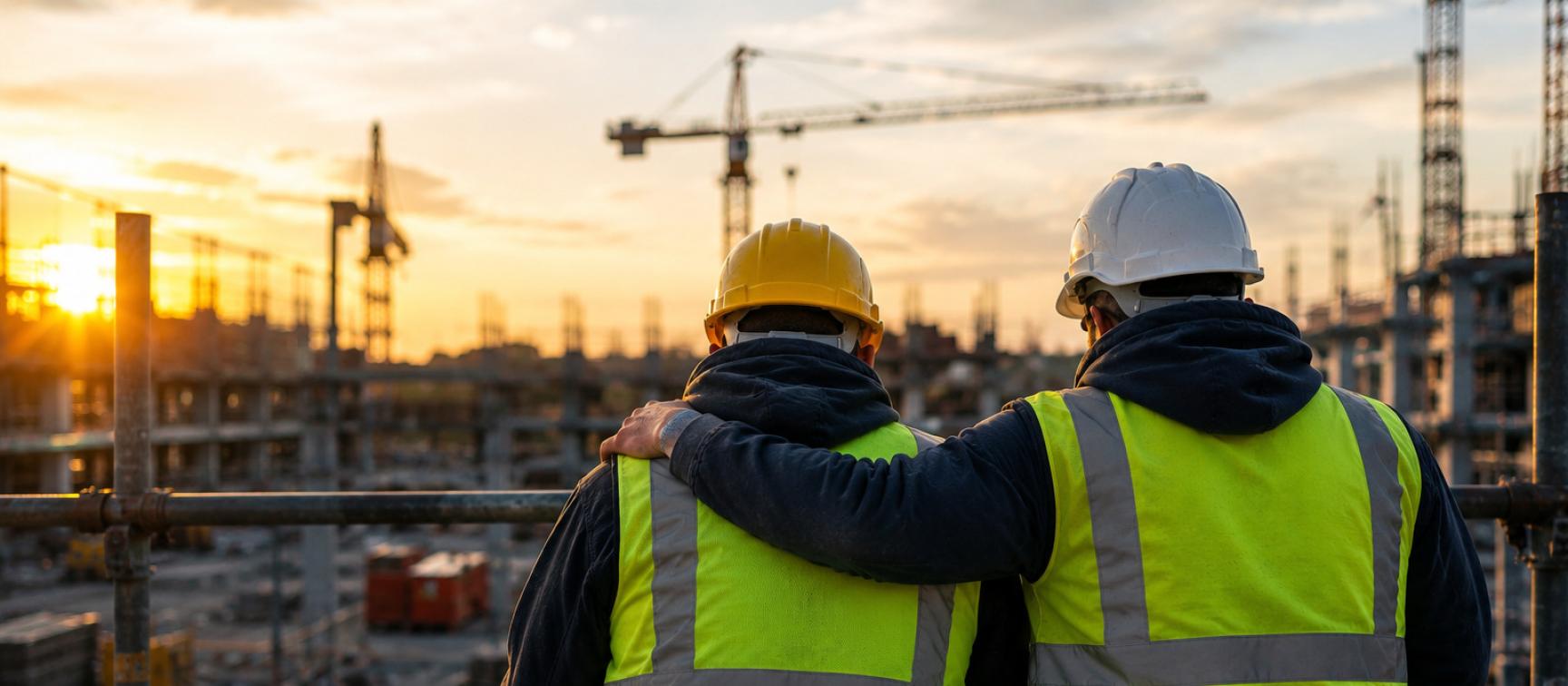
Suicide Prevention Awareness Month: Why Mental Health Matters in U.S. Construction
September is National Suicide Prevention Awareness Month in the United States. For the construction industry, the conversation carries particular importance.
Construction builds the infrastructure, homes, workplaces, hospitals, data centers, highways, and utilities that communities depend on. But behind the projects is a workforce facing a mental health challenge that the industry cannot afford to ignore.
According to OSHA, the suicide rate among construction workers is four times higher than the general population.
More recent research released by the CDC in April 2026 reinforces the seriousness of the issue. Its analysis of 2022-2023 data found that construction workers have the highest suicide rates among major occupational groups.
These aren't simply statistics. They represent people working on jobsites, managing projects, leading crews, traveling between projects, working long hours and dealing with pressures that aren't always visible to the people around them.
Why Construction?
There is no single explanation for why suicide disproportionately affects construction workers.
The CDC identifies several factors that can negatively affect mental health within construction, including seasonal employment, time away from family, workplace injuries and chronic pain, limited paid sick leave, and demanding schedules.
Anyone who has worked in construction will recognize some of those pressures.
Projects operate around deadlines. Schedules change. Budgets tighten. Problems need resolving quickly. For field leadership, a Superintendent may be responsible for dozens or hundreds of people while simultaneously managing safety, production, subcontractors, inspections, schedules, and client expectations.
Project Managers face their own pressures around cost, program, procurement, staffing, and client relationships.
For traveling construction professionals, weeks or months away from home can become part of the job.
None of these things automatically creates a mental health crisis. But when work pressure combines with financial concerns, relationship difficulties, physical pain, substance use, or problems outside work, the cumulative impact can become significant.
The Numbers Behind the Problem
The latest detailed CDC occupational suicide-rate analysis currently available provides some stark context.
In 2021, the suicide rate among men working in construction and extraction occupations was 65.6 per 100,000 workers, compared with 32.0 per 100,000 across the overall male working population included in the study.
For some individual construction occupations, the figures were even higher:
- Construction laborers: 91.0 per 100,000
- Structural iron and steel workers: 86.1
- Roofers: 79.9
- Carpenters: 69.4
- First-line supervisors of construction trades and extraction workers: 61.7
- Construction equipment operators: 58.6
- Electricians: 52.1
The CDC's updated 2026 guidance continues to list construction among the five U.S. industries with the highest suicide rates, while construction and extraction ranks first among major occupational groups.
That makes suicide prevention a construction safety issue, not something separate from it.
Mental Health Needs to Be Part of the Safety Conversation
Construction has made enormous progress in physical safety.
Companies track incidents, conduct toolbox talks, enforce PPE requirements, investigate near misses, provide safety training, and employ dedicated safety professionals.
Mental health deserves a place within that same culture.
A worker can be physically safe on a jobsite while struggling significantly outside the view of colleagues.
Creating a healthier culture doesn't mean expecting Project Managers, Superintendents, or Safety Managers to become mental health professionals. It means creating an environment where people know where support is available and feel able to ask for it.
That can include training managers to recognize potential warning signs, communicating available employee assistance programs, including mental health in safety discussions, promoting peer-support programs, and ensuring employees know how to access professional help.
Most importantly, it means challenging the idea that asking for help is somehow incompatible with working in construction.
The Industry Is Starting to Respond
There are encouraging signs that mental health and suicide prevention are becoming more visible across U.S. construction.
OSHA now maintains dedicated construction suicide-prevention resources and explicitly identifies September as Suicide Prevention Month.
This year, Construction Suicide Prevention Week takes place September 14-18, 2026, giving contractors another opportunity to bring the conversation directly onto jobsites and into offices.
The goal shouldn't be to discuss mental health for one week in September and then move on.
The bigger opportunity is to make wellbeing part of how companies think about leadership, safety, workforce management, and retention throughout the year.
988 Day: Your Reason Is Reason Enough
September 8 also marks 988 Day across the United States.
The 2026 campaign from the Substance Abuse and Mental Health Services Administration carries a simple message:
"Your reason is reason enough."
The point is important. Someone doesn't need to wait until they believe they are experiencing an emergency before reaching out.
Anyone in the United States experiencing emotional distress, a mental health crisis, suicidal thoughts, or simply needing someone to talk to can call or text 988 to reach the 988 Suicide & Crisis Lifeline. Support is confidential and available 24/7.
Looking Out for the People Building America
Construction is ultimately a people business.
Every project depends on individuals making decisions, solving problems, operating equipment, coordinating trades, leading teams, and delivering work safely.
At Approach Talent USA, we speak every day with construction professionals at different stages of their careers. We hear about exciting projects and promotions, but we also hear about burnout, difficult projects, long periods away from family, uncertainty around employment, and the pressures that can come with senior responsibility.
Recruitment is only one small part of the wider industry, but everyone working within construction has an opportunity to contribute to a culture where people feel able to speak when things aren't going well.
This September, the message is straightforward:
Look out for the people around you. Ask the question. Listen to the answer. And make sure people know that support is available.
Because the strongest construction businesses aren't defined only by the projects they build.
They're also defined by how they look after the people building them.
Need support?
If you or someone you know is struggling in the United States, call or text 988 to connect with the 988 Suicide & Crisis Lifeline. If there is an immediate life-threatening emergency, call 911.
Recent News
130 Feet Beneath Alexandria: Inside the RiverRenew Tunnel Project Transforming the Potomac
Inside San Francisco's $2.84 Billion Wastewater Transformation: Turning Waste Into Renewable Energy
White-Collar Construction Careers in 2026 and Beyond: Why Demand Has Never Been Higher