

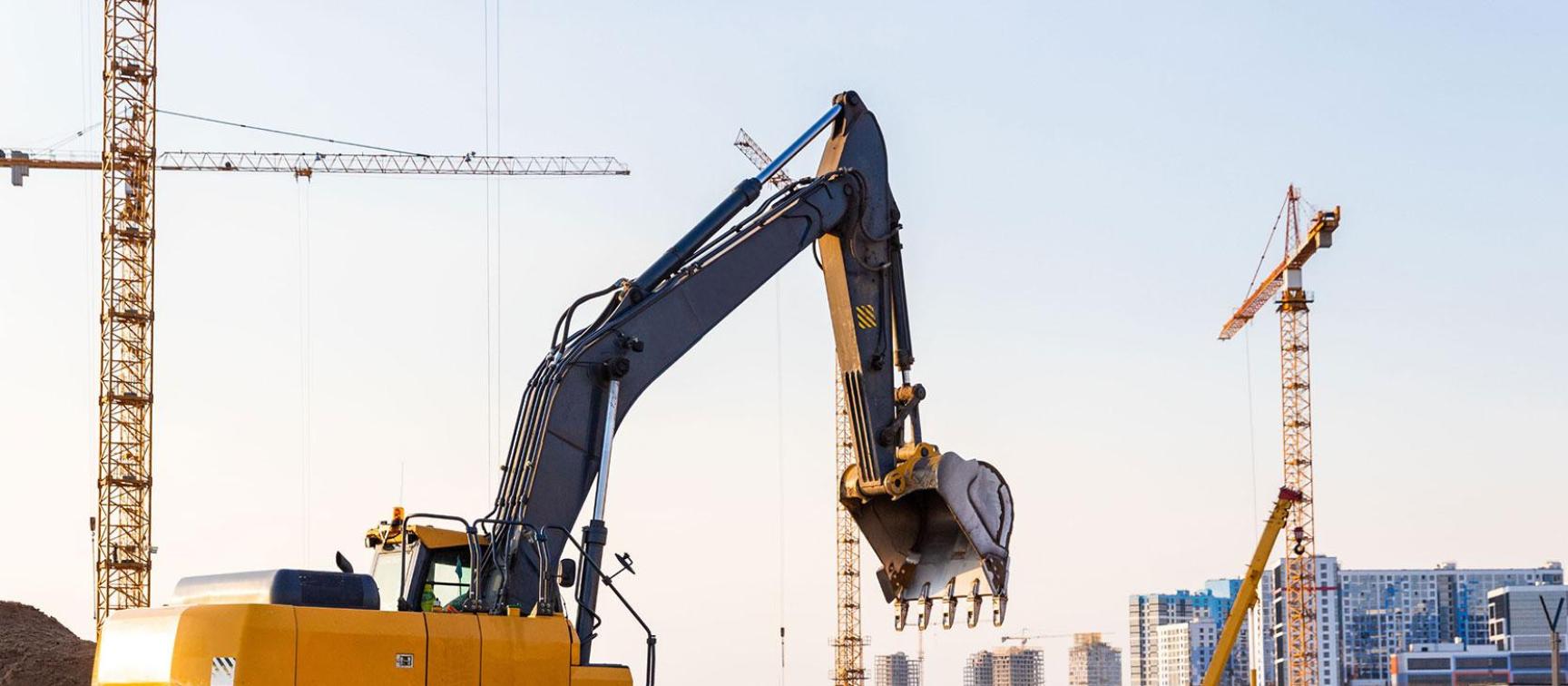
Inside Fort Worth's $464 Million Mary's Creek Water Reclamation Facility
Fort Worth is growing fast, and the infrastructure beneath the city has to keep pace.
On the western side of the city, that challenge is driving one of Texas' most significant new wastewater construction projects: the Mary's Creek Water Reclamation Facility.
The greenfield facility is being developed to provide new wastewater treatment capacity for western Fort Worth and surrounding communities, while also creating a new supply of reclaimed water that can be used for irrigation, commercial operations, and industrial purposes.
Current Texas project records estimate the main construction package at approximately $464 million, with construction expected to begin in fall 2026. The facility is being built from the ground up, bringing together major civil works, concrete structures, process equipment, membrane treatment, electrical systems, instrumentation, controls, pipelines, and pumping infrastructure.
For the construction industry, Mary's Creek is a good example of what's happening across fast-growing areas of Texas. Population growth doesn't just mean more houses, warehouses, highways, and commercial developments. It also means billions of dollars must be invested in the infrastructure that makes that growth possible.
Why Does Fort Worth Need Another Wastewater Facility?
Fort Worth's population has now passed one million, and development continues to push farther into the western side of the city.
The existing wastewater network was not designed around today's level of growth.
Wastewater generated in western Fort Worth currently has to travel roughly 30 miles through the collection system to the existing Village Creek Water Reclamation Facility on the eastern side of the city.
Continuing with that model would eventually require expensive capacity improvements to existing pipelines to prevent them from becoming overloaded.
Fort Worth studied both options.
The conclusion was that constructing a new treatment facility at Mary's Creek was the lower-cost alternative while also creating another important benefit: reclaimed water could be produced where demand is growing.
The new plant will therefore intercept and treat wastewater closer to where it is generated instead of moving increasing volumes across the city.
A $464 Million Greenfield Construction Project
Unlike an expansion or modernization of an existing treatment plant, Mary's Creek is a greenfield facility.
That makes the construction opportunity particularly significant.
Texas Department of Licensing and Regulation records currently list an estimated construction cost of $464 million, approximately 94,673 square feet of building space, and a construction period running from October 2026 through early 2030. Fort Worth's own current project schedule targets completion in May 2030.
The initial plant is being constructed with an average treatment capacity of 10 million gallons per day (MGD).
The discharge permit allows expansion to 15 MGD, while Fort Worth has planned for future phases that could eventually increase average-day capacity to 25 MGD as the western side of the city continues to develop.
That expandable design is important. Fort Worth isn't simply constructing capacity for today's population. It's building infrastructure that can grow alongside the communities it serves.
What's Actually Being Built?
The scale becomes clearer when you look beyond the headline construction value.
The current construction scope includes equalization and peak-flow storage basins, preliminary treatment, coarse and fine screening, grit removal, bioreactors, membrane tanks, sludge pumping, ultraviolet disinfection, cascade aeration, chemical storage and feed systems, solids handling, odor control, electrical buildings, instrumentation, controls, security systems, site grading, paving, excavation, yard piping, and a new outfall.
A dedicated Operations Building will contain administration space, maintenance facilities, blowers, pumps, and electrical equipment.
The solids side of the facility will include sludge holding tanks alongside thickening and dewatering equipment.
New electrical buildings and systems will support the plant, while instrumentation and controls will bring the different treatment processes together into an integrated operating facility.
For contractors, this is exactly what makes major water and wastewater projects so interesting.
They're heavy civil projects, but they're also highly sophisticated process facilities.
Membrane Technology at the Heart of the Plant
Mary's Creek is expected to use modern treatment technology within a relatively compact footprint.
Fort Worth has explored the use of membrane bioreactor technology, which combines biological wastewater treatment with membrane filtration.
Instead of relying solely on conventional settling processes, thousands of hollow membranes can separate extremely small particles from the treated wastewater.
The city has also identified ultraviolet disinfection as part of the treatment approach, allowing bacteria and viruses to be inactivated while reducing reliance on chemical disinfection.
These systems add another layer of complexity to construction.
Building the concrete structures is only part of the job. Mechanical equipment, pumps, membranes, blowers, electrical distribution, instrumentation, automation, chemical systems, and controls all have to operate together before the plant can be commissioned.
More Than Just a $464 Million Treatment Plant
The plant itself isn't the only construction required.
Fort Worth is also developing new lift stations, force mains, and associated wastewater infrastructure needed to move flows through the new system.
Two related projects illustrate the wider scale.
Construction planning documents put the Walnut Creek Lift Station at approximately $48.4 million and the Mary's Creek Confluence Lift Station at approximately $58.6 million.
Taken alongside the preliminary $464 million construction estimate for the treatment facility, those three major packages alone represent more than $570 million of planned construction.
And that's before considering every supporting pipeline, engineering, inspection, testing, equipment, and professional services contract associated with delivering the wider system.
$348 Million in Federal Financing
Projects on this scale require equally significant financing.
In January 2026, Fort Worth authorized a Water Infrastructure Finance and Innovation Act financing package with the U.S. Environmental Protection Agency for Mary's Creek.
City documents authorize an initial principal amount of up to approximately $347.7 million, excluding capitalized interest.
The project is also expected to use financing through the Texas Water Development Board's Clean Water State Revolving Fund.
For contractors delivering the work, federal and state financing adds another dimension to project management. Construction teams must work within requirements covering areas such as documentation, regulatory coordination, wage compliance, inspection, materials testing, payment applications, schedule management, change orders, and closeout.
Turning Wastewater Into a Resource
There's another important reason Fort Worth chose Mary's Creek.
The water leaving the facility won't simply be treated as waste.
Fort Worth intends to reuse as much of the treated water as possible for applications such as landscape and athletic-field irrigation, commercial use, and industrial processes.
Any remaining treated water can be discharged into Mary's Creek under stringent Texas Commission on Environmental Quality requirements.
This matters in a state where population and economic growth are increasing pressure on water supplies.
Every gallon of reclaimed water used for cooling, industrial operations, or irrigation is potentially a gallon of drinking-quality water that doesn't have to be used for that purpose.
Fort Worth considers expanded reclaimed-water use an important part of its future water strategy, and the anticipated supply from Mary's Creek is included in the Texas State Water Plan.
What Mary's Creek Means for Construction
Mary's Creek highlights just how broad the workforce requirement can become on a modern wastewater project.
Delivering the plant will require expertise across:
- Project Management
- Construction Management
- General Supervision
- Project Engineering
- Civil and Structural Engineering
- Mechanical Engineering
- Electrical Engineering
- Instrumentation and Controls
- Process Engineering
- Estimating
- Scheduling
- Quality Control
- Safety
- Commissioning and Startup
Then there is the craft workforce required to physically build the facility, from concrete and underground utilities to mechanical piping, structural steel, electrical installation, equipment setting, and instrumentation.
Construction management alone has been budgeted at approximately $8.7 million, with the scope covering inspection, materials testing, schedule monitoring, change management, equipment training, startup, commissioning, and project closeout.
The challenge isn't simply having enough people. Projects like this need professionals who understand complex water and wastewater construction and can coordinate multiple disciplines through startup and commissioning.
Texas Growth Means Infrastructure Growth
Mary's Creek is particularly relevant because it tells a much bigger Texas construction story.
New housing and commercial development tend to be the most visible signs of population growth. But every new community also requires roads, electricity, drinking water, stormwater infrastructure, and wastewater capacity.
Fort Worth Water's capital investment has already grown sharply. The utility reports capital spending rising from $289 million in FY2022 to $726 million in FY2025, with another $601 million adopted for FY2026.
Mary's Creek sits directly within that investment cycle.
The facility is being constructed because the city is planning for where people and businesses are moving, rather than waiting for the existing wastewater system to reach its limits.
Building Infrastructure Before Growth Overtakes Capacity
Mary's Creek Water Reclamation Facility isn't the largest wastewater treatment plant in America, and that isn't what makes it interesting.
Its significance lies in why it is being built.
A city of more than one million people is expanding westward. Existing wastewater infrastructure would eventually require major upgrades to accommodate that growth. Fort Worth has instead chosen to build a new, expandable treatment facility closer to where future demand will be concentrated.
The result is a project with an estimated $464 million main construction package, more than $570 million across the plant and two related lift stations, federal financing approaching $348 million, an initial 10 MGD treatment capacity, and a long-term pathway toward 25 MGD.
It will also create a new reclaimed-water resource while reducing pressure on existing wastewater infrastructure.
For America's construction industry, Mary's Creek is another reminder that population growth creates infrastructure work long after the houses, offices, warehouses, and factories start appearing.
Someone has to build the systems underneath them.
At Approach Talent USA, we work with contractors and engineering firms delivering water, wastewater, and heavy civil infrastructure across the United States, connecting them with the Project Managers, Superintendents, Engineers, Estimators, and construction professionals needed to turn major infrastructure investment into operating facilities.
Recent News
Inside California's $6 Billion Sites Reservoir: Building One of America's Largest New Water Storage Projects
Expert Advice to Prepare for a Construction Job Interview: Building Your Career in the U.S.
Inside Tampa Bay's $181 Million Water Treatment Expansion: Building for Florida's Future